Endodontic Retreatment
Root Canal Care
About This Service
Patients come to Bixby Endodontics when a previously treated tooth starts hurting again, an X-ray shows concern, or healing does not go as expected.
A tooth that has already had root canal treatment can sometimes develop new symptoms, persistent infection, or delayed healing. Endodontic retreatment allows a specialist to reopen the tooth, remove prior filling material, look for missed anatomy or new contamination, and determine whether the tooth can still be preserved.
Why a root canal can need a second look
Retreatment may be needed if narrow canals were difficult to find, a restoration leaked, a new cavity formed, the tooth cracked, or healing did not progress as expected. The issue is often treatable, but it needs a careful diagnosis before deciding the next step.
What the specialist is looking for
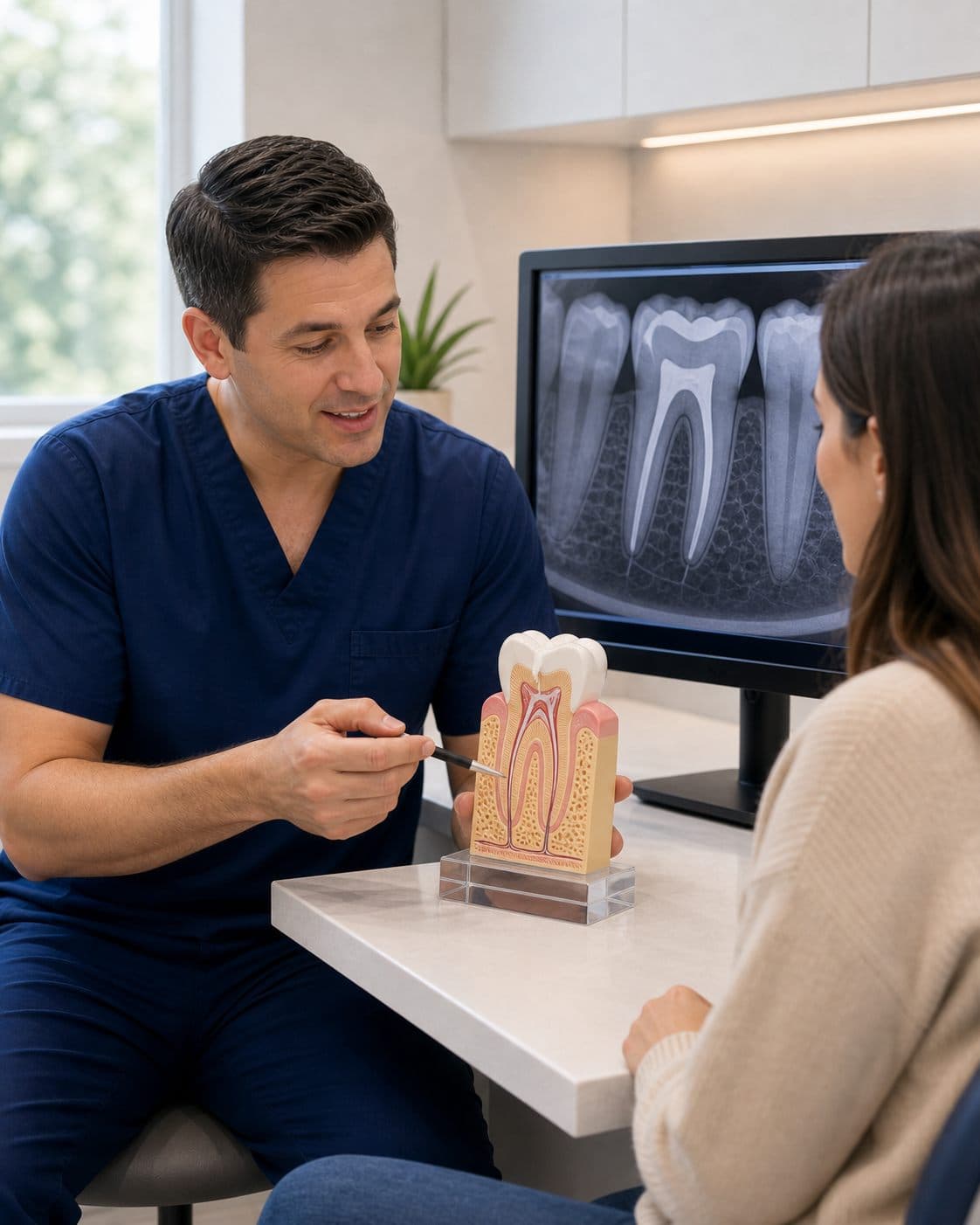
Your endodontist evaluates the prior treatment, the restoration, the surrounding bone, and the full canal anatomy. Imaging and magnification can reveal details that help explain why symptoms returned and whether retreatment has a reasonable prognosis.
Retreatment, surgery, or another option
Some teeth are best treated through nonsurgical retreatment, while others may need endodontic surgery or a different restorative plan. The consultation should make the options, risks, and timing easier to understand.
The Process
Review
We review your history, current symptoms, prior imaging, and the condition of the existing restoration.
Access
If retreatment is appropriate, the tooth is reopened and prior root canal filling material is carefully removed.
Reclean
The canal system is inspected, disinfected, shaped, and sealed again with attention to missed or complex anatomy.
Coordinate
We discuss healing expectations and coordinate the final restoration or follow-up plan with your dentist.
Common Questions
Retreatment is not right for every tooth, but a Bixby Knolls specialist evaluation can clarify whether the tooth can still be saved and what option makes the most sense.
Benefits
- Reevaluates a previously treated tooth
- Addresses renewed or persistent infection
- May help avoid extraction
- Clarifies complex symptoms
- Uses specialist imaging and diagnosis
- Supports coordinated restorative planning